
Watch
Opening
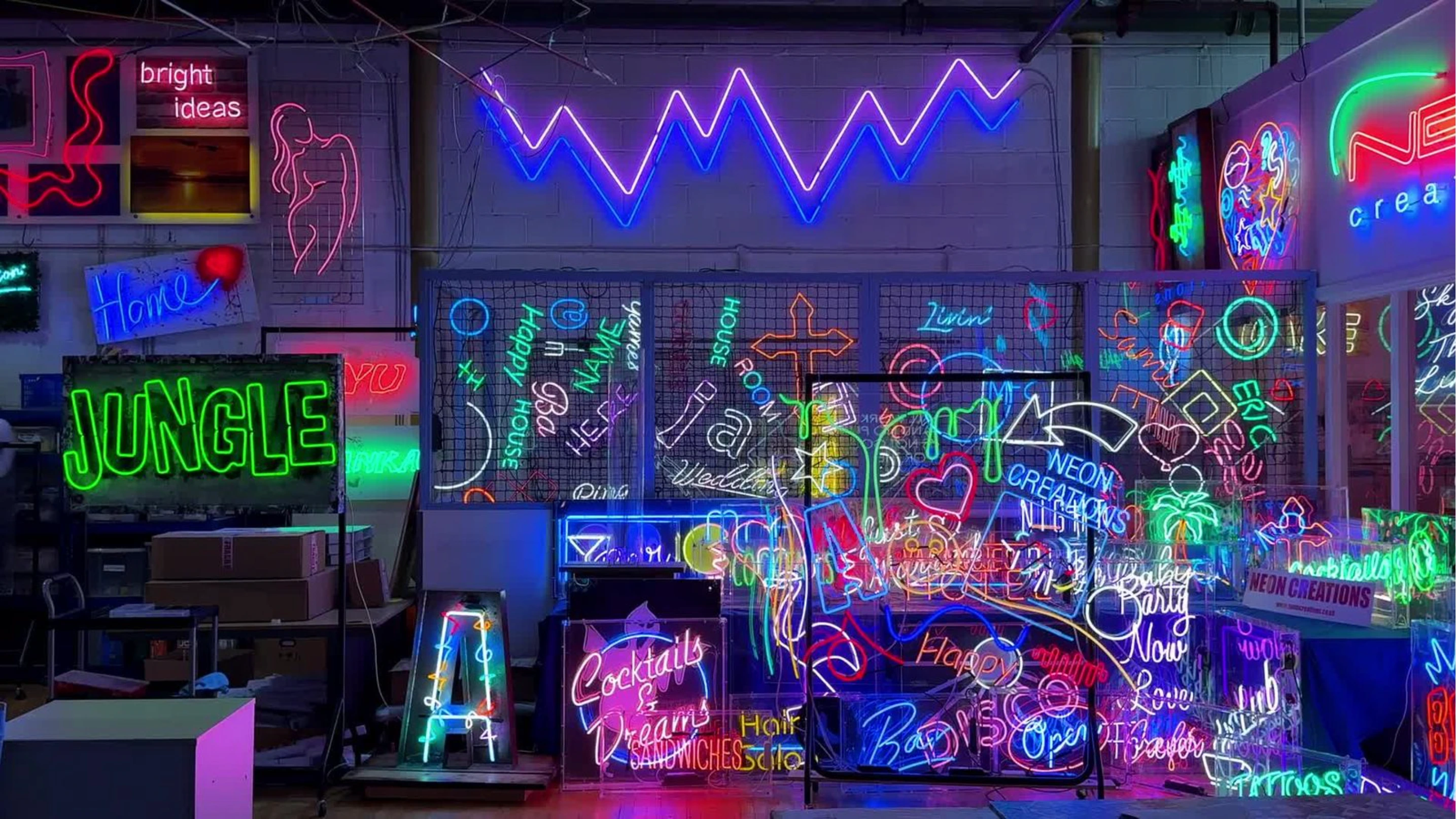
The film opens inside the Neon Creations workshop — glass racks labelled «BLUE / NEON / CLEANING» — where co-founder and master glass-bender Tony Spink, thirty-plus years in the craft, explains that the technique has barely changed in a century; archival British Pathé footage of Piccadilly Circus (Coca-Cola, Gordon's Gin) threads the history.
History
1898: Ramsay and Travers discover neon. 1910: Georges Claude commercialises it, first shown at the Paris Motor Show in 1912. For nearly a century, neon was the symbol of urban modernity across the world's cities.
The Craft
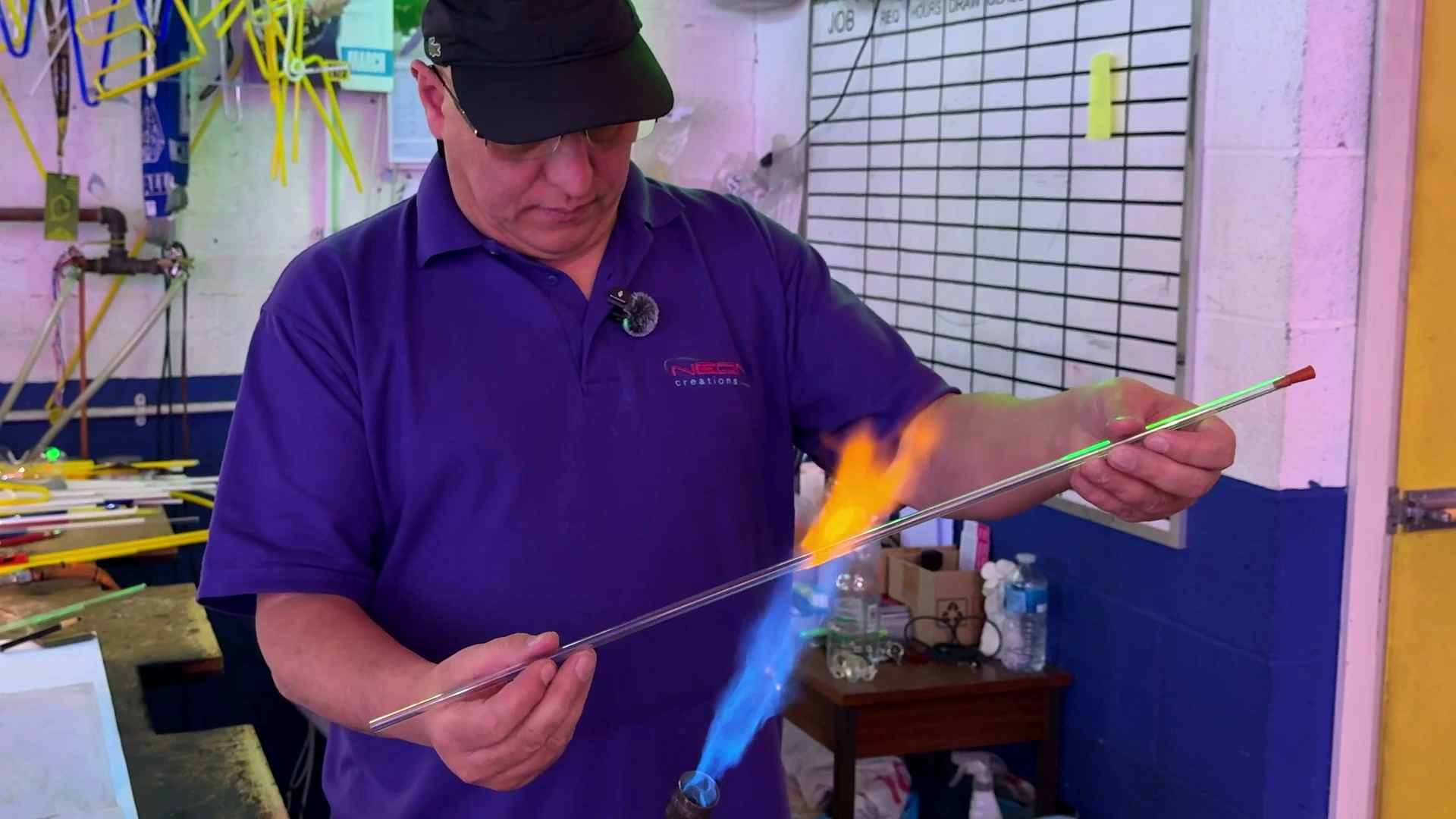
Glass must be softened over a 1000°C flame before it can be bent — one continuous motion, eight to nine bends, no second chances («twist, twist, twist — always keep the glass in the flame»). After bending: electrode welding, vacuum pumping, inert-gas filling. Design, glass, chemistry and electricity, all interlocked.
The People
Samantha Beresford entered the trade at 16 and spent thirteen years becoming a senior bender — drilling «ten right angles and ten double bends» until her success rate rose from 1-in-10 to 9-in-10. Tony reflects that neon has turned from signage into art.
The Crisis
Heritage Crafts UK's Red List of Endangered Crafts has listed neon making as endangered since its 2019 edition — the latest figures put it at roughly 24 firms, 27 full-time and 8 part-time artisans nationwide, with no apprentices. E-commerce platforms sell LED as «neon» at cut prices, eroding the public's understanding of the real thing. Linda Edwards of the British Sign & Graphics Association calls for true neon to be recognised as «living heritage» and for the word «neon» itself to be protected. Samantha's vow closes the film: «I will not let neon become extinct.»
My Contribution
Fully independent production — topic research, script, first-person voiceover («Tony encouraged me to try again…»), interviews with Tony Spink, Samantha Beresford and Linda Edwards, filming, and the DaVinci Resolve edit. I also tried my own hand at bending glass on camera.