
Miners’ Strike 40th Anniversary Event: Memories still echo between
For the guests and attendees of the 1984 Miners’ Strike anniversary event, 40 years is enough time for some history to fade but the echoes still resonate in their brains.
The 1984 miners’ strike is regarded as the most violent labour dispute in Britain in the 20th century, and it has left a scabbed but still painful wound on local communities, especially in former mining towns.
Chorley and Coppull, may not be as well-known as Rotherham for ‘Battle of Orgreave’, a serious violent clash between mounted police and striking miners during the 1984 strike. Yet in May 1984 about 100 miners living in Coppull and Chorley went on strike.
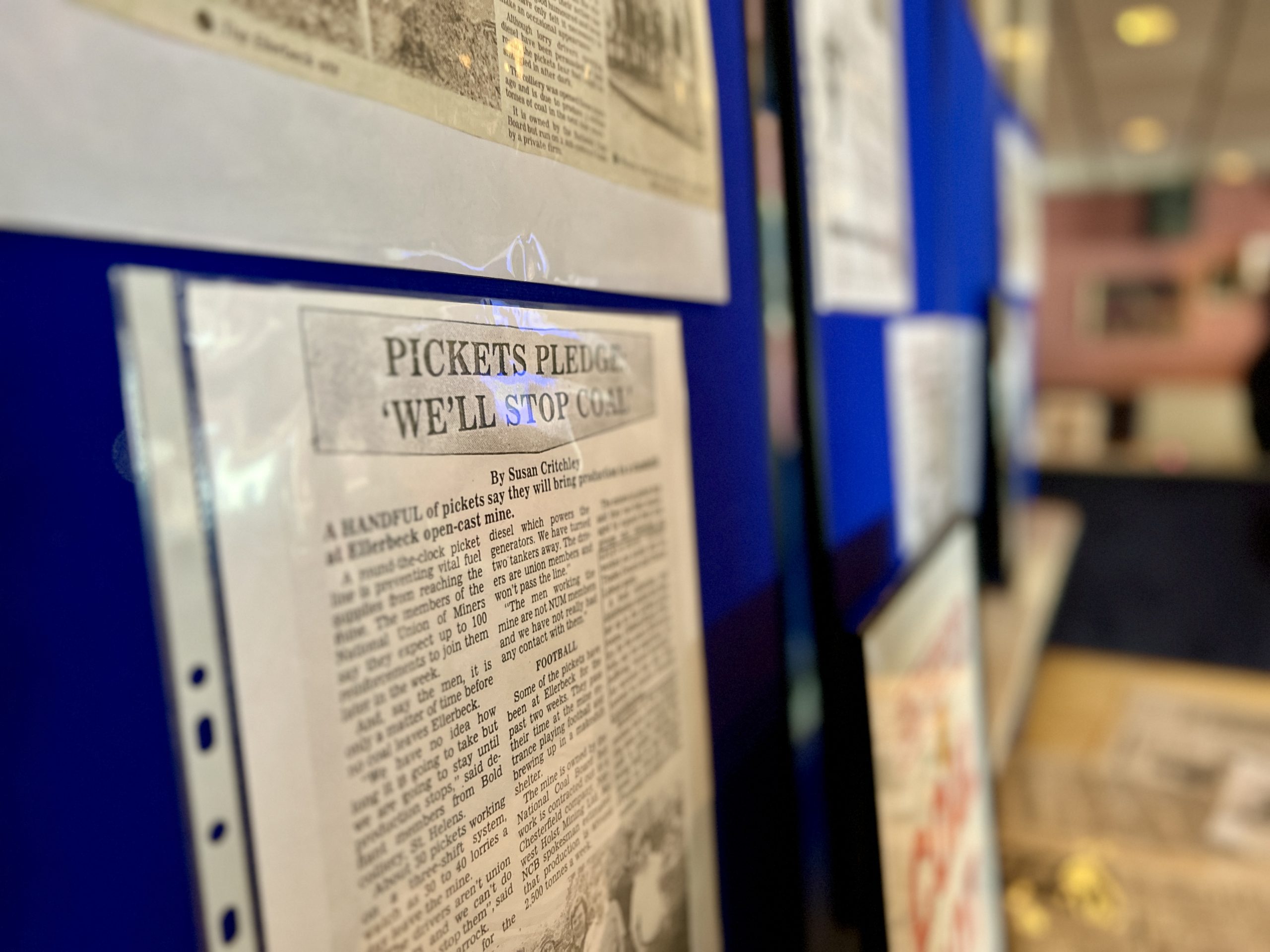
Most of them had been employed by Parkside Colliery in Newton le Willows, and some by Sutton Manor, Golborne, and Bold Collieries, as well as the Ellerbeck opencast coal mine at Wigan Lane near Chorley, which was set up during the strike.
Now some of them, those who used to intervene in a picket line, and the women who supported them attended the Chorley and Coppull Miners’ Strike 40th Anniversary event organised by Chorley & District Trades Union Council at 27th April, 2024.
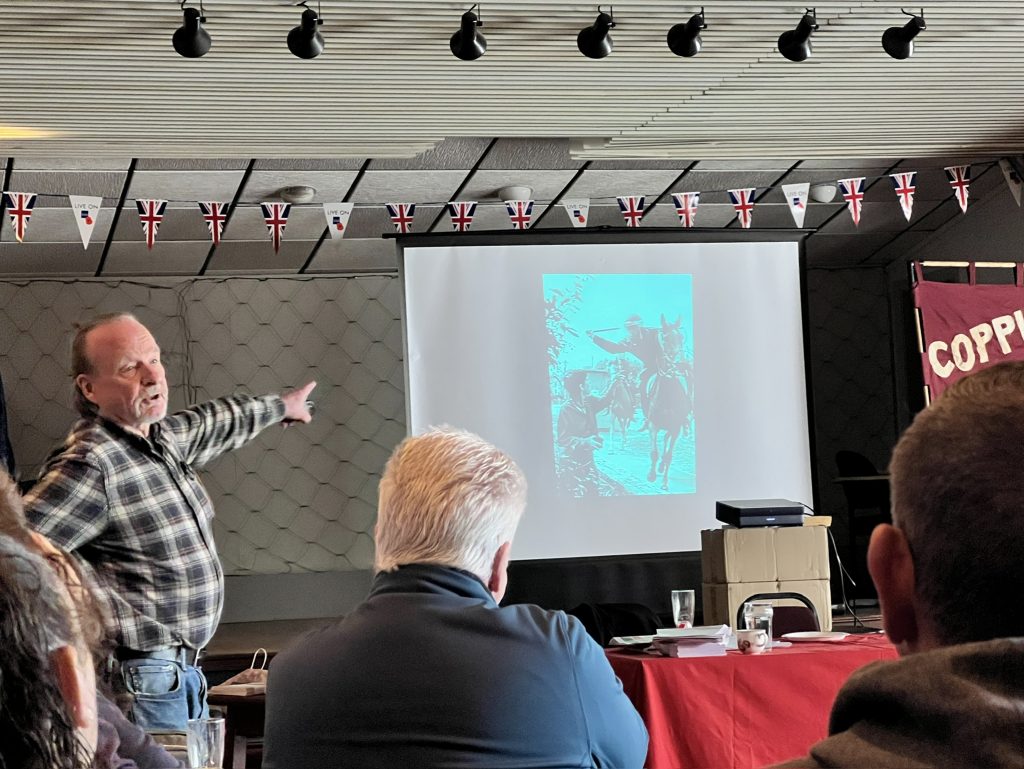
Some of the more recognizable names from the event were also present, such as photographer John Harris, who took the famous photograph of the mounted policeman baton charging Leslie Bolton at Orgreave, and leading activists Betty Cook and Heather Wood, in the Miners’ Strike and organizers of the National Women Against Pit Closures.
For Samantha Gent, who was a child when the strike began in 1984 and has limited memories of the strike itself, a day of remembrance was very inspirational and fruitful for her.

What impressed her most was Betty Cook and Heather Wood sharing their experiences of supporting the strike.
She recalled how she felt saying:” So to hear from the women as well and to sort of understand from Betty and Heather that strike would not have happened if it hadn’t been for the support of the women because it had gone back to work. It was the women that basically said ‘we will sort out the food. We’ll make it happen. We’ll make sure you all get fed and the kids get fed.’ If the women had not done that, that strike action would not have happened.
“Look how long they’ve lasted and look how much information they’re giving us now in the, such a tangible piece of history to engage with.”
For some other who experienced those, the 1984 miners’ strike is a very painful memory, which includes the clashes between the police and the population, which were violent at the time, or the tearing apart of communities, work groups and even families during the strike.
One man (remain anonymous), who attended the event did not want his experiences, sealed away for 40 years, to be known by many, which for him was a gulf between father and son.
He was a member of the miners in the Chorley and Coppull area at the time of the 1984 miners’ strike. His father was also a working miner during that period.
Conflicts arose within the family when the “son” supported the strike while the father chose to work as usual. He does not mention the process, but the ten years of silence between father and son after 1985, despite the return to normal relations, remained a “stay with me for the moment” experience.
This is just one example of the scars left by the 1984 Miners’ strike. Coalfield representatives at a special meeting of the United National Mineworkers’ Conference on 3 March 1985 narrowly voted to end the strike. Miners returned to work on 5 March.
There is a brief summary of all the things that followed like a flood is given in The Miners’ Strike of 1984-5: an oral history, Oxford. The failure of the strike resulted in the closure of most coal mines, the general de-industrialisation of the economy, the rapid privatisation of nationalised industries, the disintegration of organised labour, an increase in unemployment, the hollowing out of mining and other working-class communities, and rising social inequality in British society.
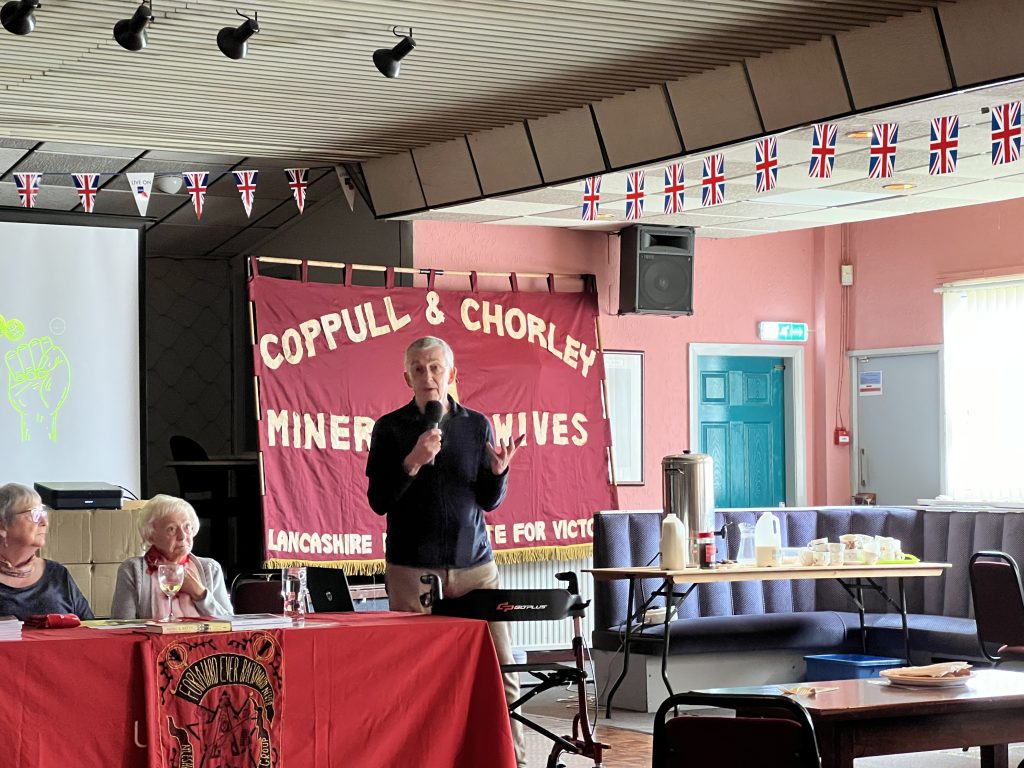
Dave Beale, Lancashire Association of Trade Union Councils representative and one of the organisers of the anniversary event.
He shared with me what he thought the event and the understanding of what the 1984 miners’ strike meant to people, people who had been there, people who wanted to know more about it.
He says:“There’s something. I know I could say that because I was involved in it at the time, but I still think it’s an utter inspiration that if people could do that for that length time and the detail of how they did things and the way it brought the community together just in my area. And we Learned how to solve problems in terms of food and bills and dealing with all these things.
“I would argue they don’t just relate to trade unions. They also relate to other forms of protest and struggle.”
Dave is also preparing an exhibition of web pages showing his collection of newspapers, posters, photographs of the 1984 Miners’ Strike in his local area of Chorley since 1984.
For those who lived through the 1984 miners’ strike, the occasion of a day of remembrance may be one that evokes memories of united resistance, or it may be one that lingers for years. For newer generations, it may be a microcosm that exposes them to the history of workers’ rights struggles.
Regardless, these things still echo and resonate at the foundation of the decade that followed. And perhaps inspire a new generation of people fighting for their rights.